 Janic Duplessis
8b9f790069
Janic Duplessis
8b9f790069
Summary: When using a medium (500) font weight on Android the wrong weight is used for the placeholder and for the first few seconds of input (before it gets text back from JS). To fix it I refactored the way we handle text styles (family, weight, style) to create a typeface to be more like the `Text` component. Since all these 3 props are linked and used to create the typeface object it makes more sense to do it at the end of setting props instead of in each prop handler and trying to recreate the object without losing styles set by other prop handlers. Do do that we now store fontFamily, fontStyle and fontWeight as ivar of the ReactEditText class. At the end of updating prop if any of those changed we recreate the typeface object. This doesn't actually fix the bug but was a first step towards it. There were a bunch of TODOs in the code to remove duplication between `Text` and `TextInput` for parsing and creating the typeface object. To do that I simply moved the code to util functions in a static class. Once the duplication was removed the bug was fixed! I assume proper support for medium font weights was added for `Text` but not in the duplicated code for `TextInput`. ## Changelog [Android] [Fixed] - Fix medium font weights for TextInput on Android Pull Request resolved: https://github.com/facebook/react-native/pull/26434 Test Plan: Tested in my app and in RNTester that custom styles for both text and textinput all seem to work. Repro in RNTester: ```js function Bug() { const [value, setValue] = React.useState(''); return ( <TextInput style={[ styles.singleLine, {fontFamily: 'sans-serif', fontWeight: '500', fontSize: 32}, ]} placeholder="Sans-Serif 500" value={value} onChangeText={setValue} /> ); } ``` Before: 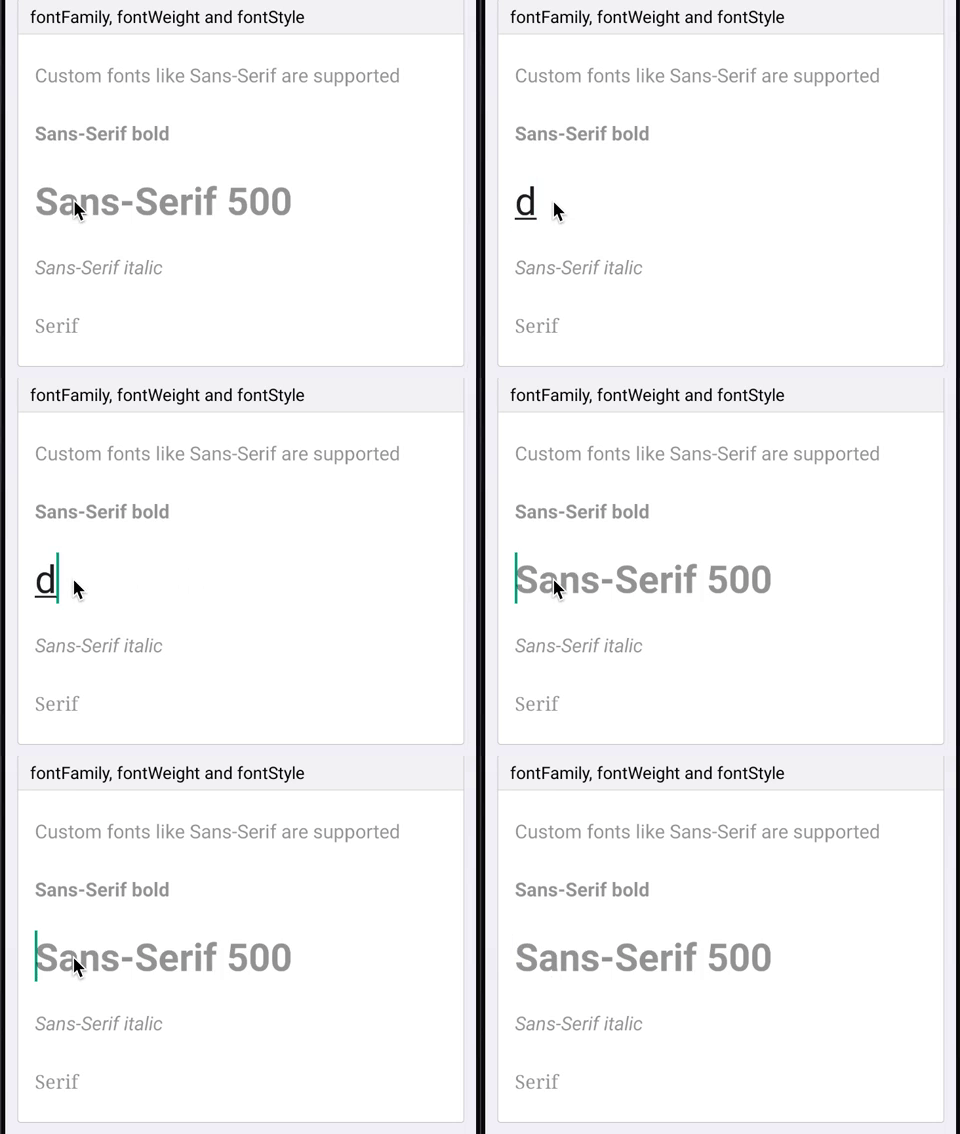 After: 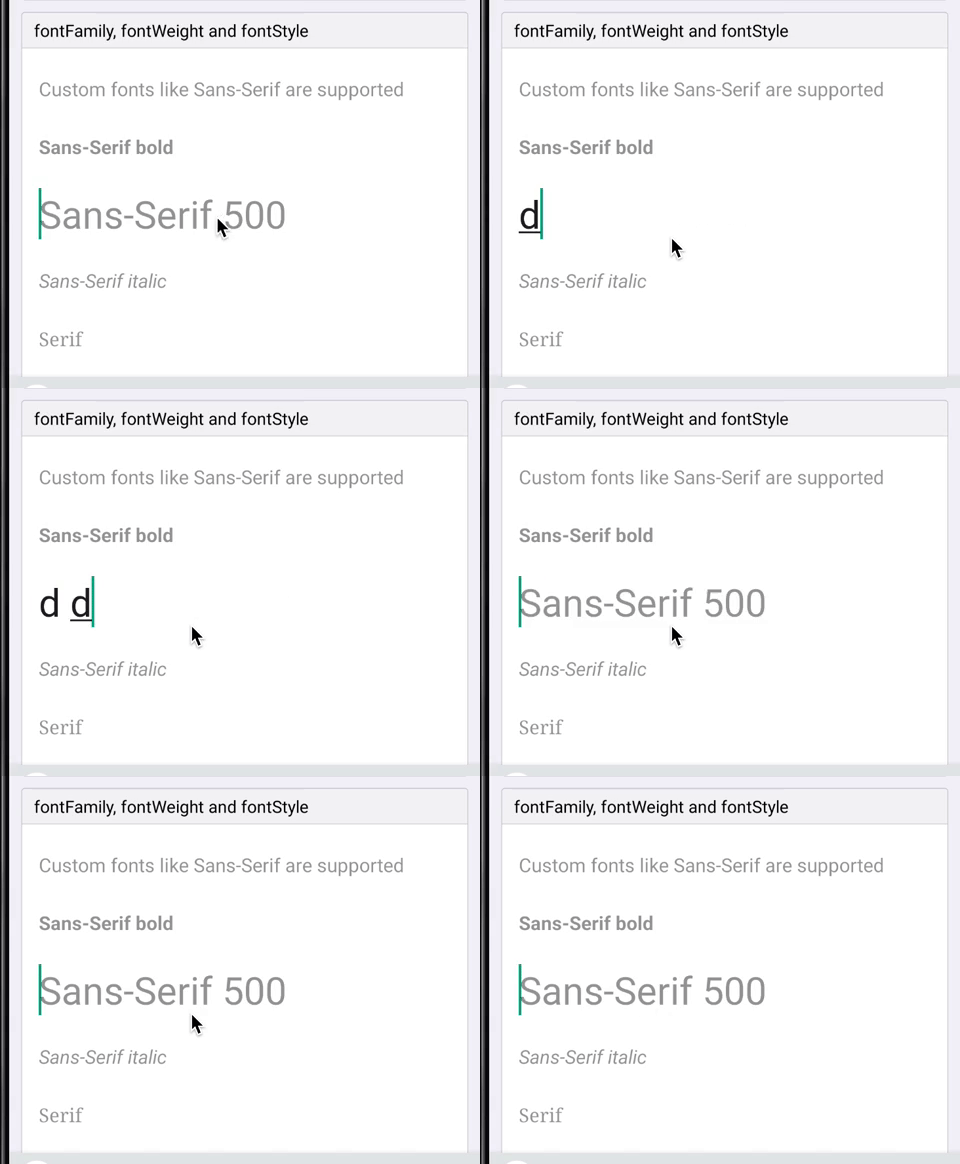 Reviewed By: mmmulani Differential Revision: D17468825 Pulled By: JoshuaGross fbshipit-source-id: bc2219facb94668551a06a68b0ee4690e5474d40


React Native
Learn once, write anywhere:
Build mobile apps with React.





Getting Started · Learn the Basics · Showcase · Contribute · Community · Support
React Native brings React's declarative UI framework to iOS and Android. With React Native, you use native UI controls and have full access to the native platform.
- Declarative. React makes it painless to create interactive UIs. Declarative views make your code more predictable and easier to debug.
- Component-Based. Build encapsulated components that manage their own state, then compose them to make complex UIs.
- Developer Velocity. See local changes in seconds. Changes to JavaScript code can be live reloaded without rebuilding the native app.
- Portability. Reuse code across iOS, Android, and other platforms.
React Native is developed and supported by many companies and individual core contributors. Find out more in our ecosystem overview.
Contents
- Requirements
- Building your first React Native app
- Documentation
- Upgrading
- How to Contribute
- Code of Conduct
- License
📋 Requirements
React Native apps may target iOS 9.0 and Android 4.1 (API 16) or newer. You may use Windows, macOS, or Linux as your development operating system, though building and running iOS apps is limited to macOS. Tools like Expo can be used to work around this.
🎉 Building your first React Native app
Follow the Getting Started guide. The recommended way to install React Native depends on your project. Here you can find short guides for the most common scenarios:
📖 Documentation
The full documentation for React Native can be found on our website.
The React Native documentation discusses components, APIs, and topics that are specific to React Native. For further documentation on the React API that is shared between React Native and React DOM, refer to the React documentation.
The source for the React Native documentation and website is hosted on a separate repo, @facebook/react-native-website.
🚀 Upgrading
Upgrading to new versions of React Native may give you access to more APIs, views, developer tools and other goodies. See the Upgrading Guide for instructions.
React Native releases are discussed in the React Native Community, @react-native-community/react-native-releases.
👏 How to Contribute
The main purpose of this repository is to continue evolving React Native core. We want to make contributing to this project as easy and transparent as possible, and we are grateful to the community for contributing bugfixes and improvements. Read below to learn how you can take part in improving React Native.
Code of Conduct
Facebook has adopted a Code of Conduct that we expect project participants to adhere to. Please read the full text so that you can understand what actions will and will not be tolerated.
Contributing Guide
Read our Contributing Guide to learn about our development process, how to propose bugfixes and improvements, and how to build and test your changes to React Native.
Open Source Roadmap
You can learn more about our vision for React Native in the Roadmap.
Good First Issues
We have a list of good first issues that contain bugs which have a relatively limited scope. This is a great place to get started, gain experience, and get familiar with our contribution process.
Discussions
Larger discussions and proposals are discussed in @react-native-community/discussions-and-proposals.
📄 License
React Native is MIT licensed, as found in the LICENSE file.
React Native documentation is Creative Commons licensed, as found in the LICENSE-docs file.